PRESENCE
What we wear teaches us how to stand.
Architecture shapes behavior long before it is noticed. A ceiling height alters breath. A threshold slows the step. A room teaches stillness or urgency without instruction. Clothing operates in much the same way. It is architecture worn close to the body—moral in its consequences, quiet in its instruction.
To dress is not merely to select fabric. It is to choose a structure that governs movement, attention, and interaction. Weight, cut, and restraint impose limits that shape posture. These limits are not restrictive by nature. They are formative.
Clothing disciplines the body before the mind becomes aware of the lesson.
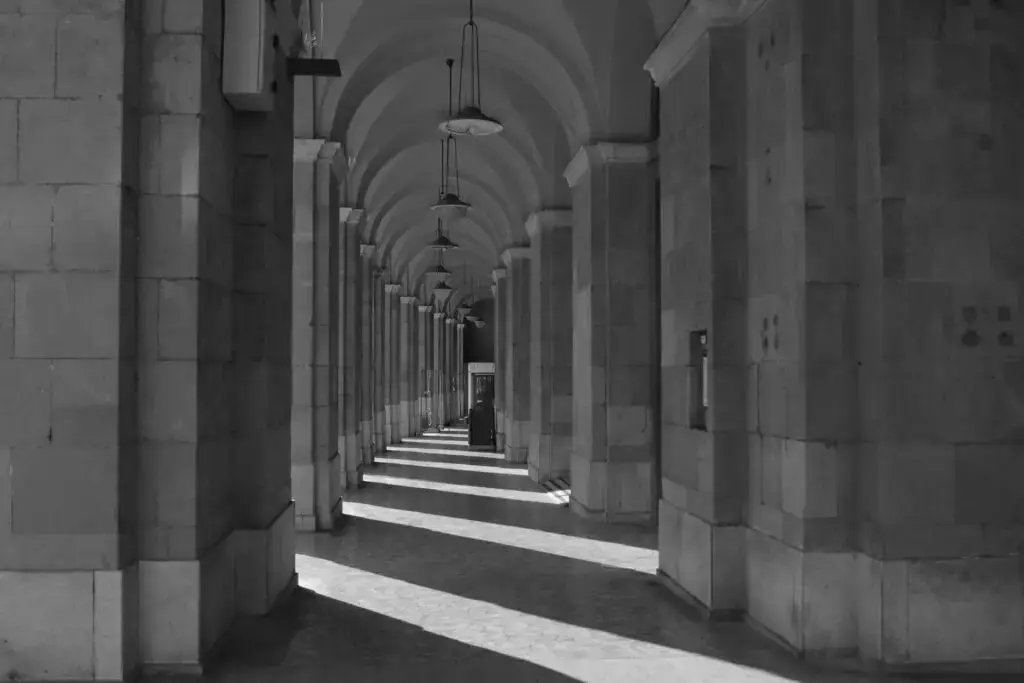
Fashion may treat dress as expression alone—an outward broadcast of identity, mood, or intention. In this framework, clothing is mutable, responsive to impulse, and free of obligation. But architecture—moral or material—does not function this way. It endures. It forms.
When clothing is designed with restraint, it stabilizes the self. Excess movement is quieted. Gesture becomes deliberate. The body learns proportion through containment. In this learning, presence acquires gravity.
What holds the body steady holds the self steady.
Across cultures, garments associated with dignity share common features: weight, structure, continuity. They are not optimized for speed or novelty. They ask the wearer to adapt—to slow, to attend, to inhabit space with care. In doing so, they communicate seriousness without display.
Clothing as moral architecture withstands trend. Trends dissolve structure in favor of immediacy. Architecture refuses immediacy. It favors coherence over reaction, endurance over novelty.
Dress that endures does not follow the moment; it withstands it.
The ethical dimension of clothing emerges here. What we wear shapes how we regard ourselves and how we regard others. It influences the boundaries we keep and the respect we extend. Clothing that demands constant adjustment fragments attention. Clothing that holds form allows attention to settle.
This is not an argument for uniformity. It is an argument for intention. Moral architecture does not erase individuality; it frames it. Within structure, variation gains meaning. Without structure, variation dissolves into noise.
Restraint gives freedom its shape.

When clothing functions as architecture, it supports the inner life rather than competing with it. The self is not preoccupied with display. Energy is redirected toward presence—toward listening, discernment, and measured action.
Clothing as moral architecture affirms that dignity precedes expression and that how one stands matters as much as what one says.
What we wear builds the space in which we are received.